Date night (with a toddler)

 - by Sarah Lipoff

It’s been a long week. The tot came down with a pretty nasty sick ick and the husband was super busy. On top of all that, the hubs had something going on tonight (Friday), which meant I would be on my own all day and evening with the tot. Yeah, yeah. I know some of you are rolling your eyes. But, after being with her all week, and the husband only seeing her for about two hours total each day, I was a wreck.

Last night the husband had a crazy idea. What about a date night – with the tot in tow? She and I could take the ferry into the city, rendezvous with him at the Ferry Building to enjoy a quick dinner (and a sampling of other tasty goodies), and then the tot and I could return home on the ferry with the hubs following behind an hour or so after.

At first I thought he was joking.

Load up a sickie, drag her onto a ferry, and then try to have a tasty meal out in the city?!

Yup.

I did it.

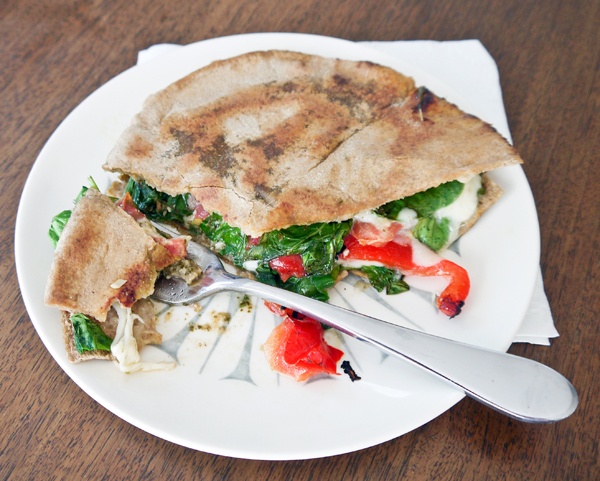
We had an awesome time. Sure, she yelled the entire time on the ferry that she was going to see her dada. Sure, she wasn’t wonderfully behaved while we were eating – but we sat outside and it didn’t matter. And, yeah, I forgot to take a picture of our dinner (but we can partially blame that on the margherita I had with the meal).

But, here are a couple of other pics…

Happy Friday!

Fine art for kids: Layering with de Kooning

 - by Sarah Lipoff

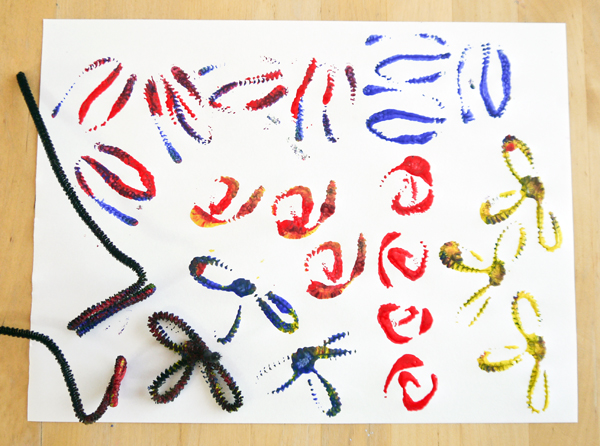
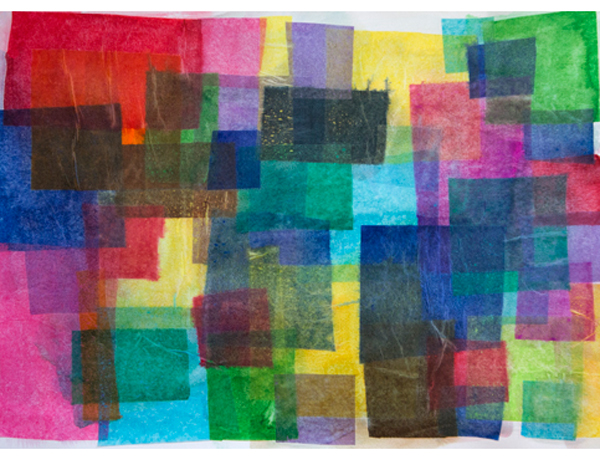
The other day the tot was really into running her cars on everything. She raced them up and down the stairs, along the walls, and even through some paint. While I was hoping this fascination would wane, I actually was inspired by her artistic creation, which reminded me of an artist I know and love. Willem de Kooning was a Dutch born artist that lived in New York for the majority of his life creating colorful and vibrantly strong images. His technique of layering on colors sometimes with strong black lines that form a figure intrigue viewers into take a closer look.

Along with being full of color, de Kooning’s abstract creations are almost childlike in the way they are sloshed together. There are chaotic areas of color, jumbled together lines, and, somehow, an image all together in one place. I pulled the tot up to the laptop and shared with her a few of de Kooning’s creations to see what she had to say.

Because de Kooning’s artworks are a bit of a mish-mash of color and line, they are wonderful inspiration for some fun fine art creations. Invite your child to scrounge around for different types of art making tools (like feathers, big paintbrushes, tiny cars, plastic shapes), which can all be used to create expressive lines.

Along with being an exciting (and messy) activity, your child will learn more about color mixing and layering paint. Younger kids can simply mix paint along with experimenting with painting tools while older kids can try to create a form or shape hidden within the splotches of color.

Offer your child a sheet of paper and position all the painting items within close reach. If you’re not excited about mess, cover the area with newspaper and your child (and yourself) with a smock.

Go ahead and squeeze out a few drops of paint onto the paper and let your child have a fabulous time moving the different painting tools through the paint. Add more paint as you go, or swap out papers with fresh ones.

Once your child is finished, allow the artworks to dry for a couple of hours and then revisit. De Kooning often finished his artworks with the image of a person or additional areas of white to define the painting. Older children can use some black paint to bodily add more lines while younger tots can slather on a bit of white paint for extra impact. We dabbed on a bit of white paint and then ran the car over the painting a few final times with some dark brown paint.

Display your child’s finished de Kooning inspired creation in a special spot for others to enjoy!


Cheesy Chicken Florentine

 - by Sarah Lipoff

After a long day I want things super simplified when it comes to dinner. I try to cook a homemade meal every night, but sometimes I need a bit of help.

There’s nothing wrong with using a boxed or canned item to make dinner easier.

I’ve also got a budding chef that’s really into helping right now, so while cruising up and down the aisles at the grocery store, something caught my eye.

Chef Boyardee Mac & Cheese. Already made in a can.

Sure, I’ve loved Chef Boyardee products forever with their saucy good pastas. But this? Mac & Cheese in a can had to come home with us.

Cooking with your kids encourages them to try new things and also introduces essential kitchen skills. Even young tots like mine can do lots of things to assist with making dinner.

I had a tasty idea for using that Chef Boyardee Mac & Cheese, and she could totally help.

After getting out a cutting board, butter knife, and a handful of mushrooms, she got busy cutting away while I had time to prepare the rest of the meal without her attached to my leg.

The thing is, Chef Boyardee is running a contest right now (December 29 through March 11, 2012) with a final winner getting a year’s worth of groceries and ten weekly $500 cash prizes.

If that’s not encouragement to get in the kitchen and get creative with the Chef, I don’t know what is!

While prepping our dinner I kept finding myself distracted while watching my daughter cut her way through those mushrooms. I was so proud of her and her budding knife skills.

She helped me mix things together and then was more than excited to sit down to dinner and enjoy what she had helped to make.

Cheesy Chicken Florentine!

This recipe is so good, super easy-and healthy (for real-under 300 calories per generous 1 cup serving and full of vitamin-packed spinach)!

This dish, that easily serves six, can be on the table in less than 30 minutes and uses one pan, which makes clean up a snap.

Serve alongside garlic toast and a few sliced tomatoes for a complete meal.

Ingredients

1 tbsp vegetable oil

1 small onion, chopped

1 clove garlic, chopped

1 lb chicken breast tenders, cubed

1 c chopped mushrooms

1/2 t pepper

1/2 t dried rosemary

10 oz box of frozen chopped spinach at room temperature and drained of water

2 15 oz cans of Chef Boyardee Mac & Cheese

1/2 c reduced fat sour cream

1/2 c shredded mozzarella

Directions

Place a 12-inch frying pan over medium-high heat and add the oil, chopped onion and garlic and stir.

Add the cubed chicken tenders along with the pepper and rosemary and let things brown for about five minutes stirring as needed so the chicken doesn’t stick to the pan.

While you’re stirring the kids can chop the mushrooms and squeeze the water from the spinach by pressing it in a colander.

Once the chicken has started to get toasty around the edges, add the spinach and mushrooms to the mix and stir.

Go ahead and turn off the heat under the frying pan and crank the oven to 400 F.

While it’s preheating, mix in the Chef Boyardee Mac & Cheese along with the sour cream to the chicken.

Sprinkle with the shredded mozzarella and pop into the oven for about 20-minutes or until the top is all bubbly brown. Dinner!

What’s your favorite Chef Boyardee product? Use it to create your own unique recipe and then share on the Chef Boyardee Facebook page for a chance to win!

Enter Chef Boyardeeís Make It Boyardeelicious Recipe Contest from December 29, 2011 through March 11, 2012 for your chance to win free groceries for a year as well as one of ten $500 weekly cash prizes. Then visit Chef Boyardeeís Facebook page from March 26, 2012 through April 8, 2012 to vote for your favorite recipes from the ìMake It Boyardeelicious Recipe Contest.î Each day, one voter will be selected to win a $100 cash prize.

Be sure to visit the Chef Boyardee Roundup page on BlogHer.com to check out other bloggersí recipes!

Dinner every night – Getting in the veggies

 - by Sarah Lipoff

This week was totally overwhelming. We are in the process of refinancing our house and were waiting on pins and needles at the beginning of the week on the appraisal, I headed into the city to meet with someone up close and personal about an exciting work adventure, there was preschool with the tot, and then two conference calls on Friday.

We had high hopes of getting a sitter for a friend’s party on Saturday night, but things just didn’t work out and the husband went solo. As much as I would have enjoyed hanging out and enjoying much needed adult time, I was exhausted, so spent a few hours with a book and some silence.

This week’s dinners started out with a bang and then kind of lost momentum. Our stuffed chicken breasts didn’t look nearly as appealing as they tasted, and frozen pizza dough saved me on Saturday evening.

But we did have two vegetarian dinners this week and I tried to keep going with our plans to ditch the carbs. By adding additional veggies to our meals we still had full plates – and full tummies.

What was your favorite meal this week at your house? Link up a recipe to share, or leave a comment telling me which recipe from our meals this week you would like me to share tomorrow!

*Top row from left to right: Mushroom stuffing stuffed chicken breasts with roasted celery and white beans, healthy beef stroganoff made with plain yogurt over spinach and egg noodles, noodle free eggplant lasagna. Bottom row from left to right: Pounded boneless chicken things over veggie filled rice with a green onion pan sauce, lean cheeseburgers with baked zucchini fries, mushroom and garlic cheese pizza with fresh ricotta.


Egg carton color fun

 - by Sarah Lipoff

The rains have arrived here in Northern California, which means re-discovering old toys and finding  fun things to do. I’m always looking for new ways to re-use stuff, and the corner of the room where the tots toys are looks like a big blow up of itty-bitty parts of puzzles and games (which no one is putting away).

We need some organization.

I pulled out a couple of egg cartons and knew they could be transformed into something useful and entertaining – at least for the day. With the help of some tape, tempera paint, and the creativity of the tot, we turned an egg carton into hours of color organizational excitement.

This is a perfect project for introducing color recognition to your kiddies – or for the older set, color theory. I offered some assistance helping to mix the primary colors (red, yellow, and blue) so the tot could paint green, orange, and purple cups, but older kids can be on their own to experiment and explore creating their own unique colors for painting the inside of the egg cups.

Simply cut the side off the egg carton, leaving the side with the egg cups, and use masking tape to section off the cups to encourage the kids to remember to paint each individual cup – instead of creating a big ol’ mess of color – and then let things dry.

While the paint is drying, invite your child to look through her collections of things for small items that are similar in color to the egg cups (which might also include a bit of cleaning up – yay!)

Once the paint is dry, offer your child the painted egg cups and invite her to organize her colorful items in the appropriate cups. She can see how many small toys she can fit in each cup, counting along the way, also encouraging her budding math skills.

Even if the egg carton color fun only lasts one day, it didn’t cost anything to make and was a fun and exciting way to organize (and maybe clean) your child’s toys – and encourage some color and math skills!


Peanut butter popcorn

 - by Sarah Lipoff

When I found out this morning that it was National Popcorn Day, everything changed. I love popcorn and it’s turned into my new super-healthy and crunchy snack sans butter but with a sprinkling of salt and a dusting of sugar. It hits the spot and is also pretty low on the calorie front. But, Thursdays are preschool days, so we headed out and my popcorn plans were put on hold until our return home.

After getting home and finishing a conference call, I got to work. I had been craving peanut butter all day, so munched down a sandwich while planning my popcorn making – and then it happened.

Why not make peanut butter popcorn?

It would either be deathly addictive or super horrid – or maybe a bit of both making it wonderfully delicious. I got to popping some popcorn and making the creaming peanut butter sauce.

Um.

Wonderfully delicious.

And this tasty and healthy snack is really easy to make and perfect for a mid-day treat or while watching late night movies – or for game day! I thought I was the original creator of this amazing concoction, but discovered there are a couple of other phenomenally smart people that came up with the combination also. This is my original recipe, but feel free to check out others and adjust as you’d like. My recipe is a bit on the healthy side, ensuring you won’t feel horrid about snarfing down the whole bowl.

Ingredients

4-6 cups fresh popped plain popcorn (1 c dry kernels popped results in about that much)

1/4 c creamy peanut butter

1 tsp honey

1 tsp brown sugar

1 tsp water

1 tbsp butter

Salt

What you do

Pop up your popcorn. If you’re using a microwave kind, select a plain style free of butter or salt. I popped up my own in a big stockpot using 1c dry kernels and a drizzle of vegetable oil.

While things are popping away, melt the butter, honey, brown sugar, and water in a small saucepan – or toss it in the microwave when your popcorn is finished. Once things are all bubbly, smooth in the peanut butter and warm until everything is all gooey.

Dump that popcorn in a big bowl and then drizzle the peanut butter sauce over the popcorn. Use a big spoon to toss the popcorn with the peanut butter mixture until everything is coated. I left my freshly popped popcorn in the stockpot, dumped in the sauce, and then held the lid in place while shaking that popcorn like crazy.

That popcorn is HOT so let it cool in your bowl before shoving a big hand full in your mouth. Give things a good dash or two of salt and then snack away!

*You know what else would make this amazing? A dash of cinnamon, or even a dash of paprika! Have fun :)

Multiple intelligences and your child

 - by Sarah Lipoff

Now that the tot’s three, life is totally different. Really? No, it’s not. Things are moving and grooving in pretty much the same way other than she can say more words and sometimes figures out how to put them together into interesting sentences, such as, “I am so not good with being okay now,” or “You that now for me, right now, right now.”

Awesome.

I’m also spending a bit more time observing her play rather than directing it. She’s starting to be old enough to go off on her own and create her own emergency care center for her stuffed animals. While watching her (and also getting some of my work done) I’m finding she’s definitely leaning toward certain ways of learning, which is super exciting and a bit overwhelming.

How can I make sure she learns to her best ability?

Understanding that each individual child is different and special in her own way and also learns in her own way. Along with using her right and left-brain in combination, she has to make split-second decisions and tap into her emotional intelligence. But, along with all that, she has a special learning style that works best for her, and connecting with her multiple intelligences only boosts abilities to greater lengths.

Wait, what?

Yeah, that’s a bit of a chunk of information, but really, multiple intelligences aren’t as scary as you think…

Defining Multiple Intelligences

Multiple intelligences are the concept and understanding that individuals learn in different ways and are more apt to retain knowledge when information is presented in a certain way. Howard Gardner, a leading expert in the area of multiple intelligences, finds intelligence is the capacity to solve problems or to fashion products that are valued in one or more cultural settings. According to Gardner there are multiple intelligences that can be valued and encouraged, creating a stronger and smarter individual, or ignored, stunting potentially important growth.

As parents, or educators, we want our kids to be smarter and think to their greatest capacities. Understanding and appreciating the different ways that kids learn and taking the time to encourage their abilities is an essential step to promoting positive life skills and development. Our brains are born pre-wired to lean in one learning direction more than another. And then, through experiences, our intelligence is increased. Multiple intelligence theory taps into the child’s intrinsic levels of motivation through natural talents, which encourages learning and development in a comfortable way.

The Multiple-Intelligences

So, what are the nine multiple intelligences? Some are interrelated and overlap a bit, but each child possesses each of these nine intelligences in varying amounts, and some are more dominant than others. They are:

-Verbal-Linguistic – This includes the ability to use words and language. If your child has a knack for picking up languages, understands and uses language properly, he probably has leanings toward being a verbal-linguistic learner. Your child may prefer to read a book than finish his homework, but finding a balance is key. Offer rewards, such as a trip to the bookstore, once academic goals are met.

-Logical-Mathematical – For children this includes the capacity to understand and recognize numbers and abstract patterns. A kid that enjoys concentrating on challenging math or logic questions and engaging in exciting science experiments has logical-mathematical leanings. You might have the next great mathematical genius on your hands, so find ways to encourage those skills through playing games such as Sudoku or tangrams.

-Visual-Spatial – This is the ability to visualize objects and special dimensions and to create internal images and pictures. It is thought that left-brain dominant learners also learn concepts best through visual-spatial activities. Your budding artist may have a completely disorganized room, but actually know where each important item is located. Find ways to encourage his skills by challenging his logical right brain, such as using toothpicks to construct a building.

-Body-Kinesthetic – The ability to use the body in a controlled physical way. Just because your child has a hard time sitting still does not mean he is a challenging learner, but that he finds moving his body an essential part of his learning experience.  Find ways to tap into your child’s bodily abilities by encouraging participation in sports that promote problem solving and quick thinking.

-Musical-Rhythmic – Recognition of musical patterns, sounds, and rhythmic beats. Kids that are excited to pound away on the piano or want to spend hours practicing the viola are learning through all that music. In fact, playing an instrument may encourage your child’s understanding of math concepts.

-Interpersonal – The ability to create personal relationships and engage in person-to-person communication. Often, children that easily empathize with others or want to help and lead others are interpersonal learners. Your interpersonal child probably loves talking, sharing and working with others, so encourage her skills by offering a video camera to use for making a movie collaboratively with friends.

-Intrapersonal – When a child has the ability to understand self-reflection and inner being. Children that are able to identify and regulate their emotions and behaviors are intrapersonally intelligent. Although it may seem that your child is withdrawn or quiet, she has a busy inner-life. Offer your child lots and lots of journals to keep important notes – and remember to respect her privacy if she does not feel like sharing.

-Naturalistic – The ability to understand, recognize and categorize items in nature. Kids that are all about digging in the dirt and exploring nature around them many have a stronger naturalistic intelligence. So head outdoors with your budding naturalist and take a trip to your local zoo or museum. She will love the experience and feel nurtured to explore the nature around her.

-Existential – Understanding and striving to learn more about human existence and question and learn about life, death, and what happens after. Children that like to question and have deep inquisitive thoughts are existentially intelligent. It may be time to hit the library or explore researching together on the Internet when you grow tired of the questions. But, teaching your existential child research skills will only benefit her for years to come.

Encouraging Multiple Intelligences

Now that you have an idea what multiple intelligences may be stronger in your child than others, what to do?

-Understand that teaching children with blanket educational styles will not promote positive learning. Getting to know each child individually offers the ability for educators, and parents, to tap into children’s intelligences and adjust learning and teaching experiences.

-As a parent, take the time to educate yourself on the multiple-intelligences concept through reading and learning more about your own learning style and intelligences. When you as a parent understand a concept, ideas are easily implemented in the home.

-In the classroom, allow students to take part in their own assessment and grading to encourage their own intelligences and self-motivation. Along with taking part in assessment, students can be included in lesson planning and encouraged to offer their opinions and ideas for teaching and learning certain topics.

-Learn more about your child’s special area of expertise and encourage it. Like earlier stated, this means that if your child is showing signs of being the next Mozart, find ways to encourage her musical talents. Even if it is not an area you are fluent in, find ways to connect and further educate the child to help promote her way of learning.

Multiple-intelligences are just another great way to expand your child’s learning abilities and learn more about the wonders of the brain.


Hot roasted butternut squash and quinoa salad (with blue cheese)

 - by Sarah Lipoff

I just love quinoa – and I’m a big fan of butternut squash. Quinoa is easy to cook (really) and so healthy for you. Not only is it packed with protein, it’s also low in cholesterol, carbohydrates, and has hardly any calories. With a nutty, crisp flavor, it’s great as a side or main dish. And, butternut squash isn’t anything to complain about either. Full of antioxidants and also low in calories, butternut squash can be enjoyed savory or sweet.

This was our winner from last week’s dinners, and I enjoyed the leftovers cold the next day for lunch. Even if you’ve never cooked quinoa before, you’ll have success with this dish – really, it’s that easy.

And, hey. Not a fan of blue cheese? Leave it out – or crumble some feta or shred on some Parmesan.

Ingredients

1 butternut squash, skin and seeds removed then diced

1 small onion chopped

1 big clove garlic chopped

1 t olive oil

1/4 c water

Dash of salt and pepper

4 c fresh spinach leaves

1/4 c crumbled blue cheese

Cooked quinoa (don’t worry, I’ll tell you how to make it later)

How to make it

Start by cutting off the skin from the butternut squash and then cutting in half. Scoop out the seeds and then chunk the squash into 1-inch pieces.

Go ahead and crank your oven to 400 F and dig out your biggest non-stick-but-safe-for-the-oven sauté pan. 12-inches is a good size, and if you don’t have a non-stick, you can use a regular one – things might just stick a bit.

Slice and dice the onion and garlic and add to the butternut squash along with a couple of good dashes of salt and pepper and the water and olive oil. Give things a stir and then toss into the hot oven.

Now get 2-cups of water boiling with a dash of salt. Once things are simmering away, add 1-cup quinoa, turn down the heat, and cover things up for about 10-minutes or so. Check back every once in a while to make sure your quinoa isn’t burning at the bottom or to add more water if things look dry. Give things a stir and then taste for doneness. You should end up with lots of itty-bitty swirls that are nice and tender and fluff with a fork.

Turn the heat off under the quinoa and leave covered. Give your butternut squash a stir and keep on roasting for another 20-minutes or so.

While the squash is finishing up, wash and dry your fresh spinach and add to a nice sized mixing bowl.

Give your butternut squash a doneness test after about 30-minutes of roasting by poking a chunk with a fork. If it goes in easy, you’re ready to go. Pull the squash out of the oven and dump in your quinoa. Give things a gently toss and return to the oven for another 5-minutes to toast up the quinoa.

Mix the hot butternut squash and quinoa with the spinach and then top with the blue cheese. You can also add another drizzle of olive oil and add additional salt and pepper to taste.

Tasty AND healthy!


Dinner every night: Cutting back on carbs

 - by Sarah Lipoff

This week was all about cutting back on pasta, pasta, pasta, pasta, and potatoes. I’ve gotten into a bit of a rut lately and giving myself the challenge of finding other fun sides was really exciting this week. I experimented with quinoa, mashed cauliflower, and did make one night of light pasta with olive oil, fresh pepper, and lots and lots of garlic. Sure, I didn’t eliminate carbohydrates altogether, but it’s a start, right?

We also worked on watching our portions and not heading back for seconds. I often make extra so the tot and I have something for lunch the next day (or for double-duty another night as dinner), so before serving I popped leftovers in the fridge making them  unappealing for more munching.

There were a few winners – and a couple of losers. The yogurt marinated rice crispy coated chicken tenders were really tasty – as well as the hot roasted butternut squash quinoa salad. I really wanted the mashed cauliflower to be phenomenal, but the hubs and I both agreed the texture was spot on, but the flavor a bit cabbage-y.

What did you make for dinner this week? Leave a comment with a recipe or link!

I’ll be sharing our favorite recipe of the week tomorrow….

*top left – basa fish tacos, top right – hot roasted butternut squash salad with half a rib-eye, middle left – yogurt marinated rice crispy coated chicken tenders with garlic spinach pasta, middle left – pulled turkey thighs over carrot couscous, bottom left – chuck roast with peas over mashed cauliflower, middle bottom – chicken/turkey sausage with caramelized onions over polenta, right bottom – the wine of the week: Bannus

Homemade self-drying play dough

 - by Sarah Lipoff

Since my parents have left I’ve had to get back to doing all that stuff I used to, like putting away the dishes, doing my own laundry, and playing with the tot. Needless to say this week kicked me hard in the tushi and I was in need of some serious help keeping things together – including my daughter from having a complete and utter boredom breakdown.

In the gift-opening panacea that was the holidays blended with the tot’s birthday, we got several small containers of play dough, which were played with for hours and hours while Gamma was here. The thing is, all that play dough blended together into an unappealing looking green blob – and left this chemical-ick smell on our hands.

Blech.

So the other day we tossed together some of our own handmade play dough – with a spin. Instead of going through all that work to heat and stir and cook, I simplified things by adding hot liquid to the flour and salt. And, to combat that wallpaper paste smell of flour and water, we added some fresh grated lemon zest and juice to the hot water.

What’s really fun about this play dough is you can add food coloring and some scented oil to make things different. We tossed in a few drops of lemon food coloring to add to the already yellow tinged dough. Once your child gets tired of squishing with the play dough, the finished creations can be left to air dry, or baked in the oven on low heat for about an hour, creating a nice, hard little sculpture they can paint or put on display for everyone to admire.

We used a few cookie cutter to make fun shapes, which we then put together into a mobile….

Ingredients

4 c flour

1 c salt

2 tbsp vegetable oil

1 1/2 to 2 c hot water

Zest of one lemon plus its juice (optional)

Food coloring (optional)

Scented oil (optional)

Directions

Measure and add the flour and salt to a big mixing bowl.

Bring the water to a boil along with the zest and juice from the lemon.

Add the hot water to the flour and salt mixture, along with the vegetable oil (along with the food coloring and scented oil), and give a good stir. If things feel too stiff, add a bit more water. Or, if things are too watery, add a bit more flour.

Dump the dough onto a work surface and knead until everything is nice and smooth without being sticky.

It’s that simple!

*To bake finished items, place in a 250 F oven for an hour.